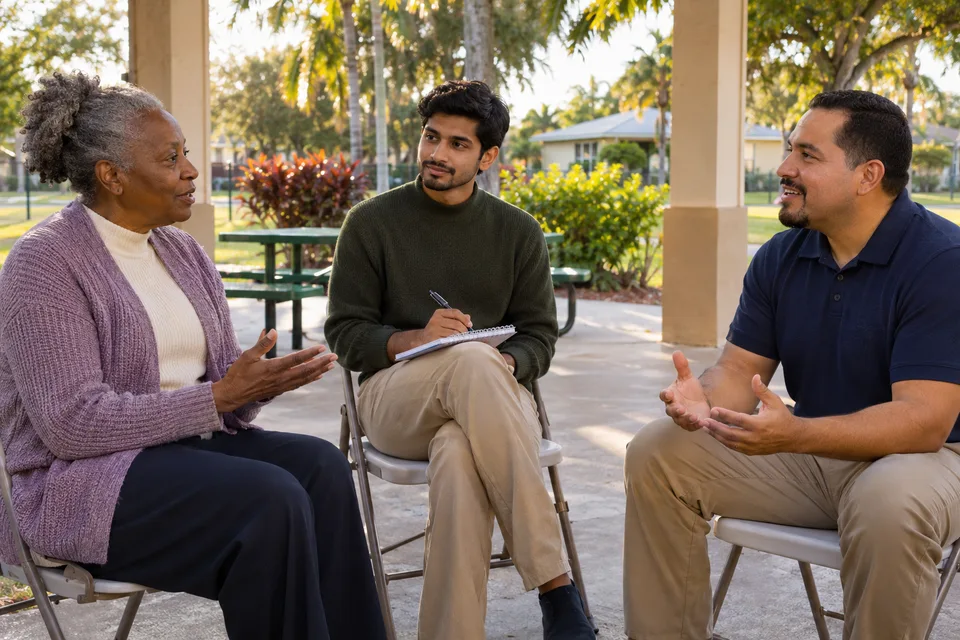
Begin with a relationship and a clear role
Ask the host what kind of follow through would help. A volunteer might check whether a promised resource reached the group, help with a regular welcome shift, or invite someone to a relevant workshop. Agree on one role, a contact method and a review date.
Keep the rhythm small and dependable
A workable starting rhythm might be one agreed follow up after each gathering and one check with the host before the next one. Give participants a clear choice about contact. Confirm what information the group needs, and keep private details within the appropriate channels.
Support goals people identify for themselves
Ask what the person is trying to develop and what kind of support would be welcome. A professional goal might call for a relevant learning event. A spiritual goal might call for a Scripture reflection or an introduction to a trusted local support person, with permission.

Offer one next step and keep the invitation open
In a fictional community group, a participant asks where to practice public speaking. A volunteer shares the dates of a local learning session, then checks once whether the information was useful. The participant chooses whether to attend and whether to reconnect.
Review the commitment with the host
At the review date, ask whether the rhythm still serves the community, what ought to change, and whether a handoff is needed. A shorter commitment can still be dependable when the host knows exactly what you can offer.
Common questions
Can I help while I am in a community for a short visit?
Ask the local host whether a bounded task is available and make a clear handoff before you leave.
Can I contribute through CSPN instead?
Explore moderation and collaboration if working group support fits your time and responsibilities. Follow the group’s onboarding and access process.
Scripture for further reading
Read each passage in context as you consider the practice.
- Hebrews 10:24–25
Put the guide into practice